Реклама автобусних перевезень не обмежується оголошеннями в Google. Пасажир рідко купує квиток після одного контакту: спочатку він шукає маршрут, порівнює ціну й графік, перевіряє довіру до перевізника, а вже потім бронює або купує квиток онлайн.
Тому просування перевізника потрібно будувати як систему. Google Ads дає швидкий попит. SEO допомагає отримувати стабільний трафік на маршрути. Соцмережі формують довіру й нагадують про рейси. Email, SMS і месенджери повертають пасажирів до повторних поїздок. Агрегатори можуть давати продажі, але не замінюють власний сайт. Аналітика показує, які канали справді приводять квитки, дзвінки та заявки.
У статті розберемо, як працює реклама в інтернеті для автобусних перевезень, які канали використовувати, як не злити бюджет на нерелевантний трафік і що має бути на сайті перевізника, щоб реклама перетворювалася на продаж квитків.
Що входить у просування автобусного перевізника
Просування автобусного перевізника охоплює канали, які відповідають за різні етапи шляху пасажира: знайти маршрут, порівняти умови, переконатися в надійності компанії, купити квиток і повернутися до повторної поїздки.
| Канал | Для чого використовувати | Приклад для перевізника |
| SEO | Отримувати органічний трафік на сторінки маршрутів, міст і корисні статті. | Сторінка Київ - Харків збирає запити купити квиток на автобус Київ Харків, розклад Київ Харків, ціна квитка Київ Харків. |
| Google Ads | Швидко отримувати трафік і заявки за маршрутними та комерційними запитами. | Оголошення веде користувача одразу на сторінку потрібного рейсу з ціною, графіком і кнопкою купівлі. |
| Соцмережі | Показувати сервіс, автобуси, команду, нові рейси, акції та живі оновлення. | Instagram Stories нагадує про рейс на вихідні, а Facebook-пост пояснює зміни в графіку. |
| Email, SMS, месенджери | Повернути пасажирів до повторних поїздок і швидко повідомляти важливу інформацію. | Пасажир, який їздив маршрутом Полтава - Київ, отримує повідомлення про додатковий рейс перед святами. |
| Агрегатори квитків | Отримувати додаткові продажі там, де пасажири вже порівнюють перевізників. | Перевізник присутній на платформі продажу квитків, але паралельно розвиває власний сайт і бренд. |
| Репутація | Підсилювати довіру перед купівлею квитка. | Відгуки, фото автобусів, відповіді компанії, рейтинг перевізника й зрозумілі умови поїздки знижують сумніви пасажира. |
| Аналітика | Розуміти, які канали дають продажі, дзвінки, бронювання й повторні поїздки. | GA4, Google Tag Manager, call tracking і CRM показують, які маршрути реально приносять дохід. |
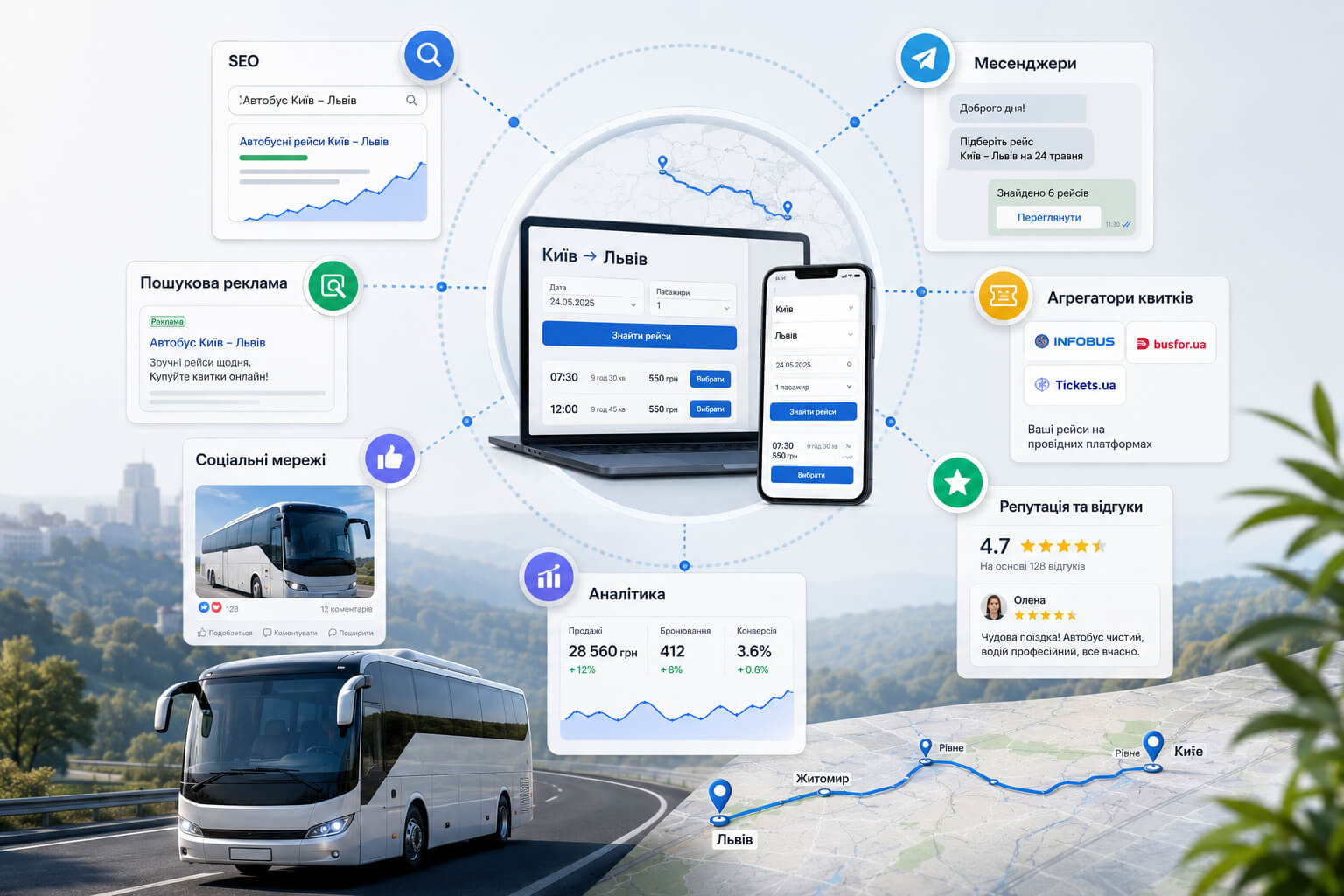
Якщо просування транспортної компанії зводиться тільки до запуску рекламних кампаній, частина потенціалу втрачається. Користувач може перейти з реклами, але купити пізніше з органічного пошуку, після нагадування в месенджері або через брендований запит у Google.
SEO для автобусних перевізників
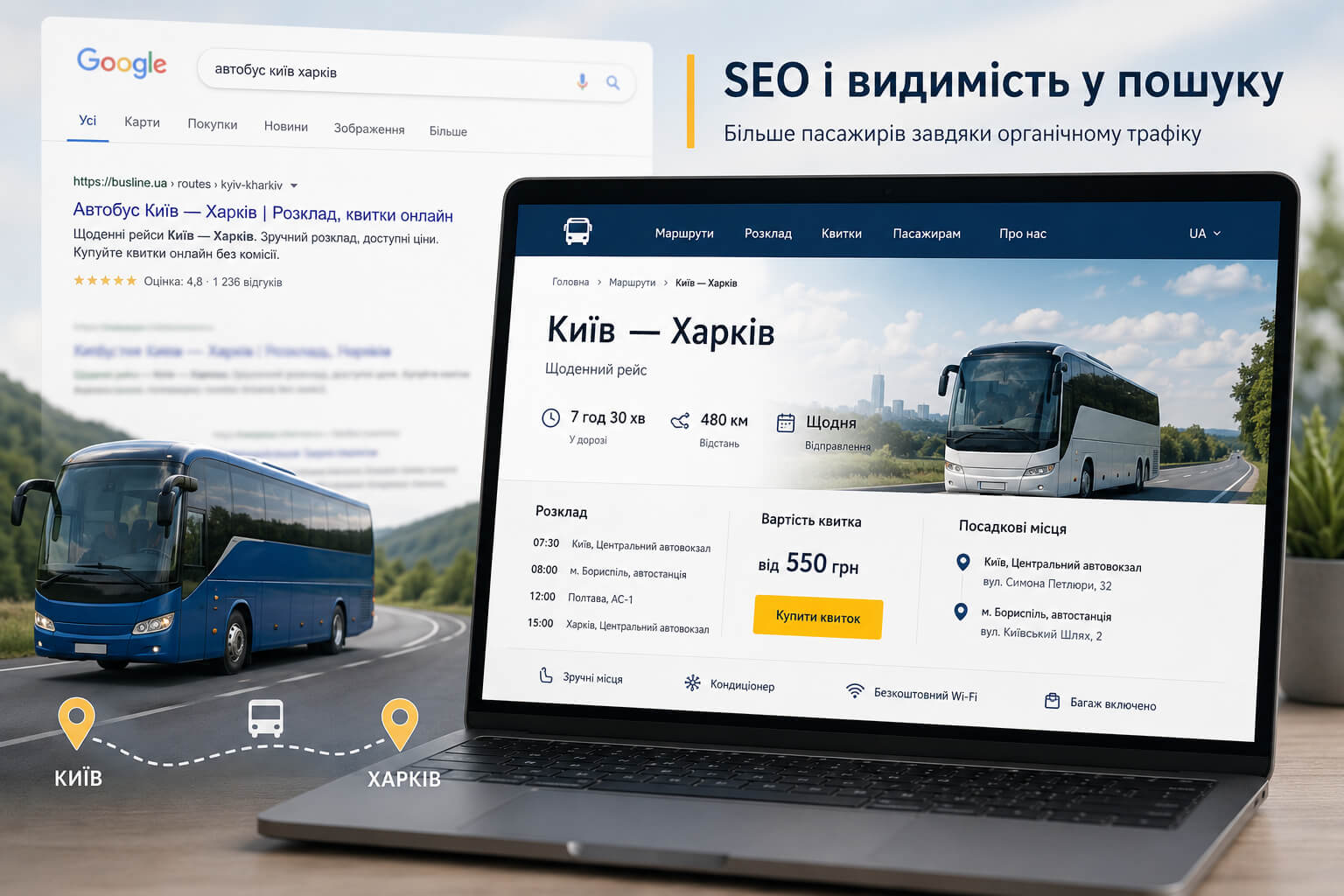
SEO-просування сайту автобусного перевізника потрібне для стабільного органічного трафіку. Люди щодня шукають маршрути, ціни, розклад, час у дорозі, точки посадки, умови багажу й можливість купити квиток онлайн. Якщо сайт не має окремих сторінок під ці запити, органічний трафік забирають агрегатори, конкуренти або інформаційні сайти.
SEO починається зі структури. Для кожного важливого напрямку потрібна окрема сторінка: Київ - Харків, Харків - Львів, Полтава - Дніпро, Київ - Луцьк, Киїів - Варшава, Україна - Німеччина та інші маршрути, які мають попит.
Сторінка маршруту має закривати не тільки SEO, а й реальну потребу пасажира. Вона повинна містити:
- напрямок і назву маршруту;
- графік руху автобусів;
- ціну квитка або спосіб швидко її перевірити;
- кнопку купівлі або бронювання;
- час у дорозі;
- точки посадки й висадки;
- умови багажу;
- способи оплати;
- контакти або швидкий зв’язок із диспетчером;
- відповіді на часті питання;
- внутрішні посилання на схожі маршрути.
Окремо працюйте з інформаційним попитом. Блог перевізника може приводити людей, які ще не готові купити квиток, але вже планують поїздку. Наприклад: що взяти в автобусну поїздку, як обрати місце в автобусі, що робити, якщо забули речі в автобусі, як доїхати з одного міста в інше, що подивитися у Львові за кілька годин. Такі статті мають нативно вести на відповідні маршрути, а не існувати окремо від продажів.
Щоб такі статті давали не випадковий трафік, а підтримували маршрутні сторінки, перед написанням потрібно зібрати семантику й зрозуміти реальний пошуковий намір. Детальніше про логіку збору та групування запитів ми писали в матеріалі про створення семантичного ядра .
Основні SEO-напрями для сайту перевізника
SEO-просування складається з кількох напрямів: структури маршрутів, технічної оптимізації, контенту, блогу та внутрішньої перелінковки. Нижче — коротко, що потрібно зробити в кожному блоці і який результат це дає сайту.
| SEO-напрям | Що зробити | Що це дає |
| Структура маршрутів | Створити окремі сторінки під основні й міжнародні напрямки. | Трафік за маршрутними запитами. |
| Мета-теги | Підготувати Title, Description і H1 під кожний напрямок. | Краща релевантність сторінки в пошуку. |
| Контент сторінок | Додати графік, ціну, посадку, багаж, оплату, FAQ, переваги рейсу. | Більше довіри й менше зайвих дзвінків. |
| Блог | Писати статті під інформаційні запити пасажирів. | Додаткові точки входу з Google. |
| Технічне SEO | Перевірити індексацію, sitemap, canonical, швидкість, мобільну версію, дублікати. | Менше технічних втрат у пошуку. |
| Зовнішнє просування | Розміщувати статті, огляди маршрутів, PR-матеріали, локальні згадки й посилання на релевантних сторонніх ресурсах. | Зростання авторитету сайту, підтримка маршрутних сторінок і кращі шанси конкурувати з агрегаторами. |
| Внутрішня перелінковка | Зв’язати маршрути, міста, блог, головну й сторінки сервісу. | Краща навігація для користувачів і пошукових систем. |
Якщо сайт уже має історію, почніть із технічного аудиту сайту . У транспортній ніші часто знаходяться проблеми з дублями сторінок, слабкою структурою маршрутів, неіндексованими сторінками, повільною мобільною версією або відсутністю нормальної перелінковки.
Зовнішнє просування сайту перевізника
Для SEO автобусного перевізника дуже важливі згадки на сторонніх ресурсах. Посилання з тематичних, локальних і медійних сайтів допомагають підсилювати головну сторінку, сторінки маршрутів і корисні статті в блозі.
У зовнішньому просуванні перевізника можна використовувати гостьові пости про подорожі між містами, локальні публікації про нові рейси, огляди напрямків, статті на міських порталах, туристичних сайтах, бізнес-каталогах і партнерських ресурсах. Наприклад, матеріал про коротку прогулянку Полтавою може природно вести на маршрут Київ - Полтава або Харків - Полтава.
Не потрібно ставити всі посилання тільки на головну сторінку. Частину посилань краще спрямовувати на пріоритетні маршрути, частину — на інформаційні статті, частину — на бренд. Анкори мають бути природними: назва перевізника, URL, назва маршруту, назва статті або нейтральна фраза.
Уникайте масових каталогів, однакових текстів, штучних анкорів і сайтів без тематики. Корисніше отримати менше якісних згадок на релевантних ресурсах, ніж багато випадкових посилань, які не дають ні трафіку, ні довіри.
Google Ads для автобусних перевезень
Google Ads допомагає швидко отримати попит під час запуску нового рейсу, просування сезонного напрямку, виходу на міжнародний маршрут, конкуренції з агрегаторами або просідання продажів на конкретній лінії.
Пошукова реклама найкраще працює за маршрутними запитами. Якщо людина шукає купити квиток Полтава Київ, автобус Київ Харків або розклад автобусів до Варшави, вона вже має сформований намір. Завдання реклами — привести її на сторінку, де можна швидко перевірити рейс і купити квиток.
Якщо потрібно глибше розібратися, як працює PPC і чому реклама показується саме за комерційними запитами, рекомендуємопочитати наш матеріал про контекстну рекламу Google .
Контекстна реклама Google Ads для автобусних перевізників має бути розділена за напрямками, а не зібрана в одну загальну кампанію. Різні маршрути мають різну конкуренцію, ціну кліка, маржинальність, сезонність і частоту повторних поїздок.
| Тип кампанії | Коли запускати | Практична порада |
| Пошукова реклама | Для маршрутів, квитків, розкладу, ціни та бронювання. | Створіть окремі групи під напрямки, комерційні запити й міста. |
| Брендова кампанія | Якщо перевізника шукають за назвою або конкуренти показуються по бренду. | Відстежуйте бренд окремо, щоб не завищувати результат загальної реклами. |
| Ремаркетинг | Для користувачів, які переглядали маршрут або починали бронювання. | Не показуйте загальний банер. Повертайте людину до конкретного напрямку. |
| Performance Max / Cross-network | Коли вже налаштовані конверсії, є дані про продажі квитків і потрібно масштабувати попит у кількох каналах Google одночасно. | Не запускайте на весь бюджет без контролю продажів, дзвінків і якості заявок. |
| Медійна реклама | Для сезонних напрямків, нових рейсів, локальної впізнаваності. | Обмежуйте географію, частоту показів і бюджет тесту. |
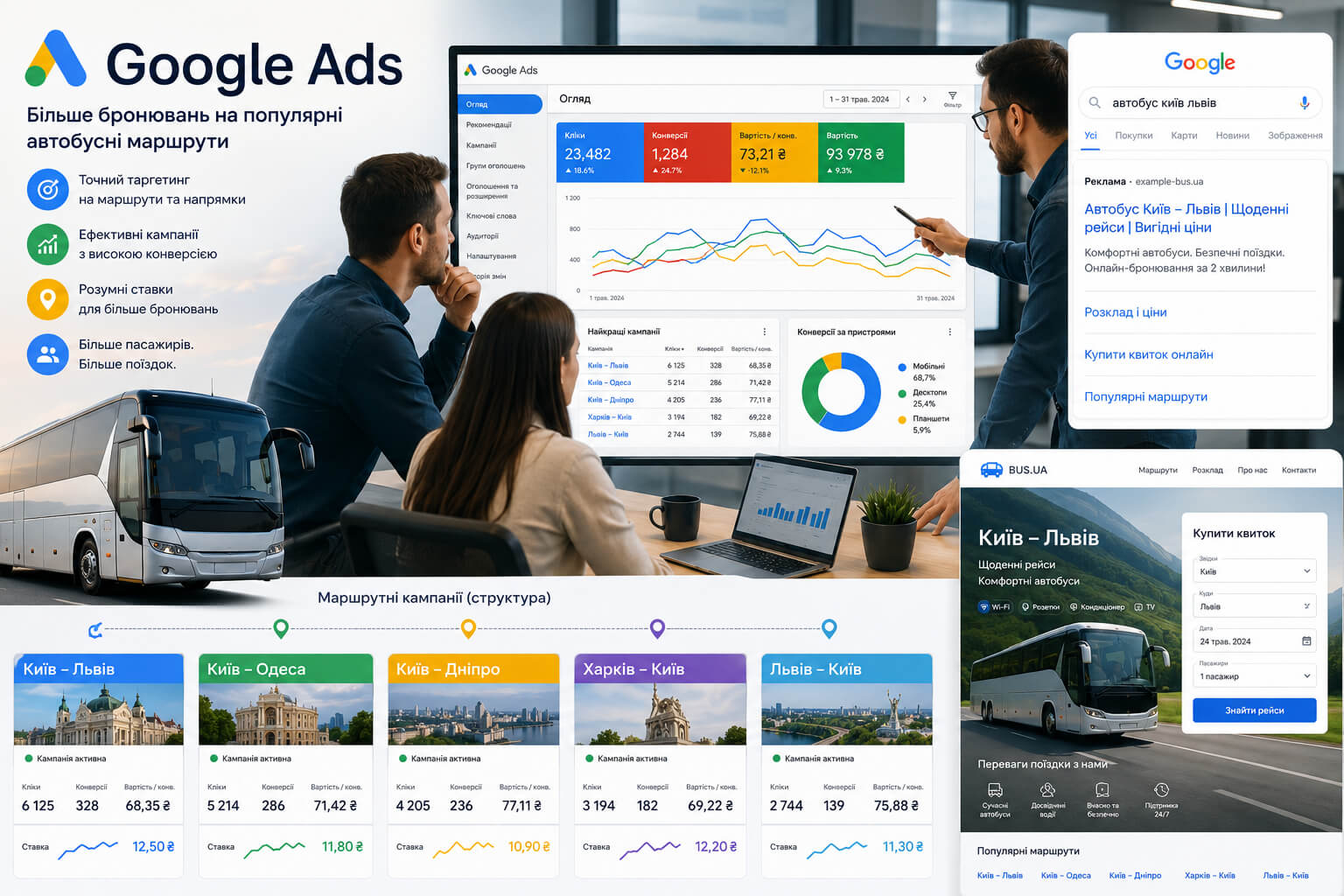
Quality Score у Google Ads потрібно сприймати як діагностичний показник. Він оцінює очікуваний CTR, релевантність оголошення і досвід цільової сторінки, але не замінює бізнес-показники. Для перевізника головними залишаються продажі квитків, дзвінки, бронювання, ціна конверсії Google Ads і дохід по маршрутах.
У SEO-Evolution ми не починаємо з автоматизації ставок там, де ще немає якісних даних. Спочатку потрібно зрозуміти, які маршрути продаються, які дзвінки мають цінність, які заявки доходять до купівлі квитка, а які лише навантажують диспетчера.
Cross-network і Performance Max
У звітах GA4 частина трафіку з Google Ads може відображатися як Cross-network. Cross-network — це канал у стандартній групі каналів GA4, куди потрапляють переходи з оголошень, що показуються одразу в кількох мережах Google, наприклад у пошуку, медійній мережі, YouTube, Gmail, Discover або Google Maps.
Найчастіше за таким трафіком стоять Performance Max або інші автоматизовані кампанії Google Ads. Тому, якщо Cross-network дає багато продажів квитків, потрібно перевірити не тільки сам канал у GA4, а й конкретні кампанії в Google Ads: які маршрути вони просувають, які конверсії отримують, яка ціна продажу або заявки та чи не забирають вони брендований попит.
Але запускати Performance Max без підготовки ризиковано. Якщо в акаунті неправильно налаштовані конверсії, система може оптимізуватися не під продаж квитка, а під менш цінні дії: перегляд сторінки, випадковий клік, короткий дзвінок або звернення без купівлі. Для перевізника важливо передавати в Google Ads саме бізнес-цінні події: купівлю квитка, бронювання, якісний дзвінок, звернення в месенджер або повторну покупку.
Соцмережі для автобусного перевізника
Соцмережі — окрема точка контакту з пасажиром. Тут перевізник може показувати сервіс, автобуси й команду, повідомляти про рейси, пояснювати умови поїздки, відповідати на часті питання та повертати людей до повторних покупок.
Щоб канал приносив більше, ніж охоплення, контент потрібно прив’язувати до конкретних рейсів і ситуацій пасажира: коли краще купити квиток, де відбувається посадка, що з багажем, як змінився графік, які напрямки актуальні перед вихідними або святами. Така комунікація може давати переходи на сайт, звернення в месенджери, дзвінки й повторні замовлення.
Що публікувати в соцмережах перевізнику:
- анонси нових маршрутів і додаткових рейсів;
- нагадування про популярні напрямки перед вихідними або святами;
- фото автобусів, салону, посадки, багажного відділення;
- відео з поясненням, як купити квиток онлайн;
- відповіді на часті питання про багаж, дітей, тварин, оплату, повернення квитка;
- пости про зміни в графіку або точках посадки;
- відгуки пасажирів і короткі історії поїздок;
- контент про міста, до яких їздить перевізник.
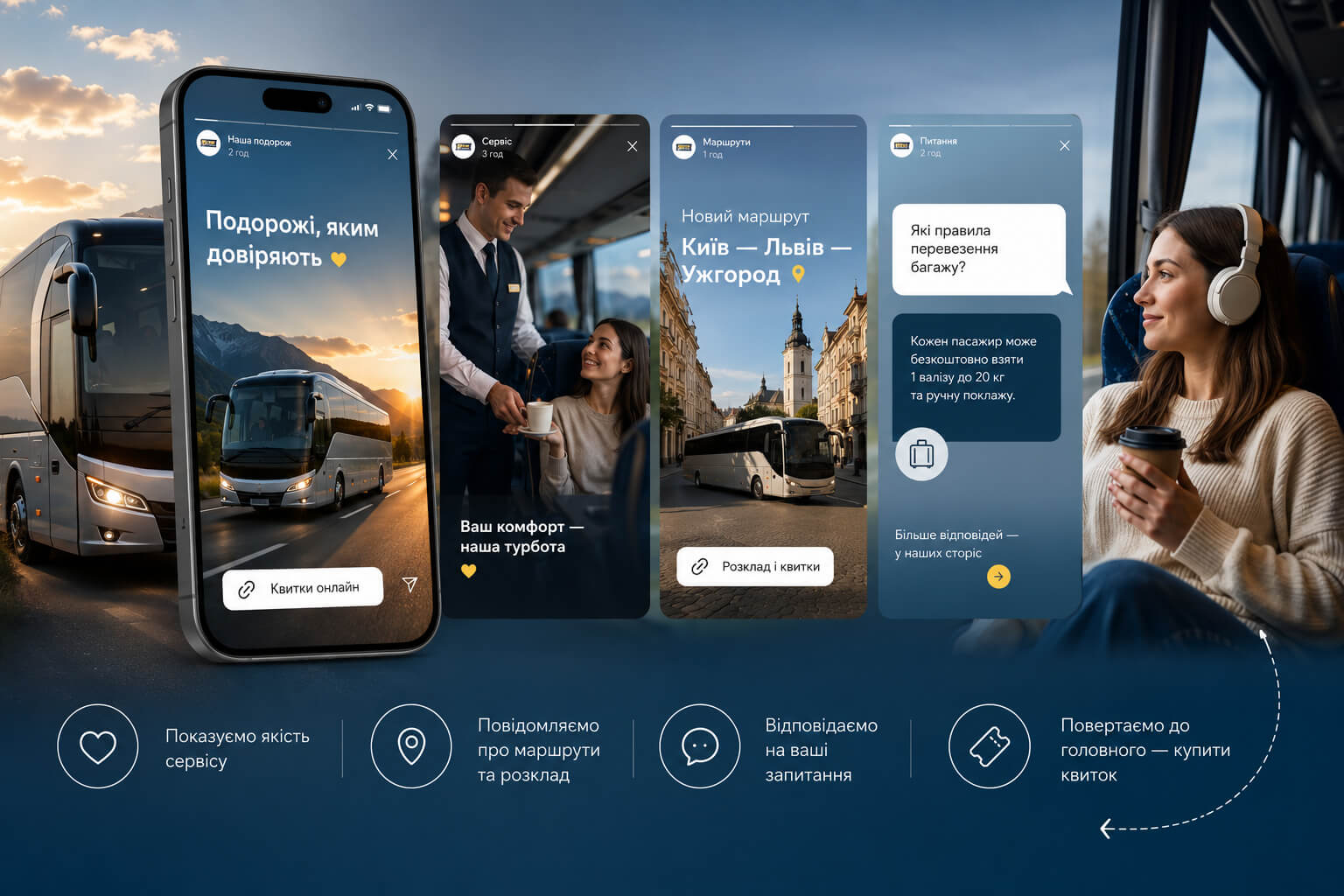
Таргетована реклама в Meta може працювати на впізнаваність бренду, для локальних або сезонних напрямків. Наприклад, перед святами можна показувати оголошення з пропозицією купити квиток на додатковий рейс. Для міжнародних напрямків можна тестувати аудиторії за географією, мовою, інтересами до подорожей і поведінкою на сайті.
Не запускайте соцмережі тільки як стрічку новин компанії. Кожен контентний блок має вести до дії: перейти на сторінку маршруту, написати в месенджер, зателефонувати, перевірити графік, купити квиток або зберегти інформацію перед поїздкою.
Email, SMS і месенджери для повторних поїздок
Email, SMS, Viber, Telegram і чат-боти допомагають підтримувати зв’язок із пасажирами після першої поїздки й повертати їх до повторних замовлень. У перевезеннях багато людей їздять одними й тими самими напрямками: на роботу, навчання, до родини, у справах, на вихідні або сезонно за кордон.
Якщо користувач уже купував квиток, залишав телефон або реєструвався на сайті, з ним можна працювати повторно. Головна умова — мати згоду на комунікацію й не перетворювати повідомлення на спам.
| Сценарій | Що відправити | Навіщо це потрібно |
| Пасажир купував квиток на певний маршрут | Повідомлення про додаткові рейси або актуальний графік цього напрямку. | Повернення до повторної покупки. |
| Користувач почав бронювання, але не завершив | Нагадування з посиланням на маршрут і можливістю завершити купівлю. | Повернення покинутого бронювання. |
| Наближаються свята або канікули | Добірка популярних рейсів і порада купити квиток заздалегідь. | Завантаження рейсів у піковий період. |
| Змінився графік або точка посадки | Коротке сервісне повідомлення з актуальною інформацією. | Менше дзвінків диспетчеру й менше непорозумінь. |
| Після поїздки | Подяка, прохання залишити відгук, посилання на повторне бронювання. | Репутація, повторні продажі, зростання довіри. |
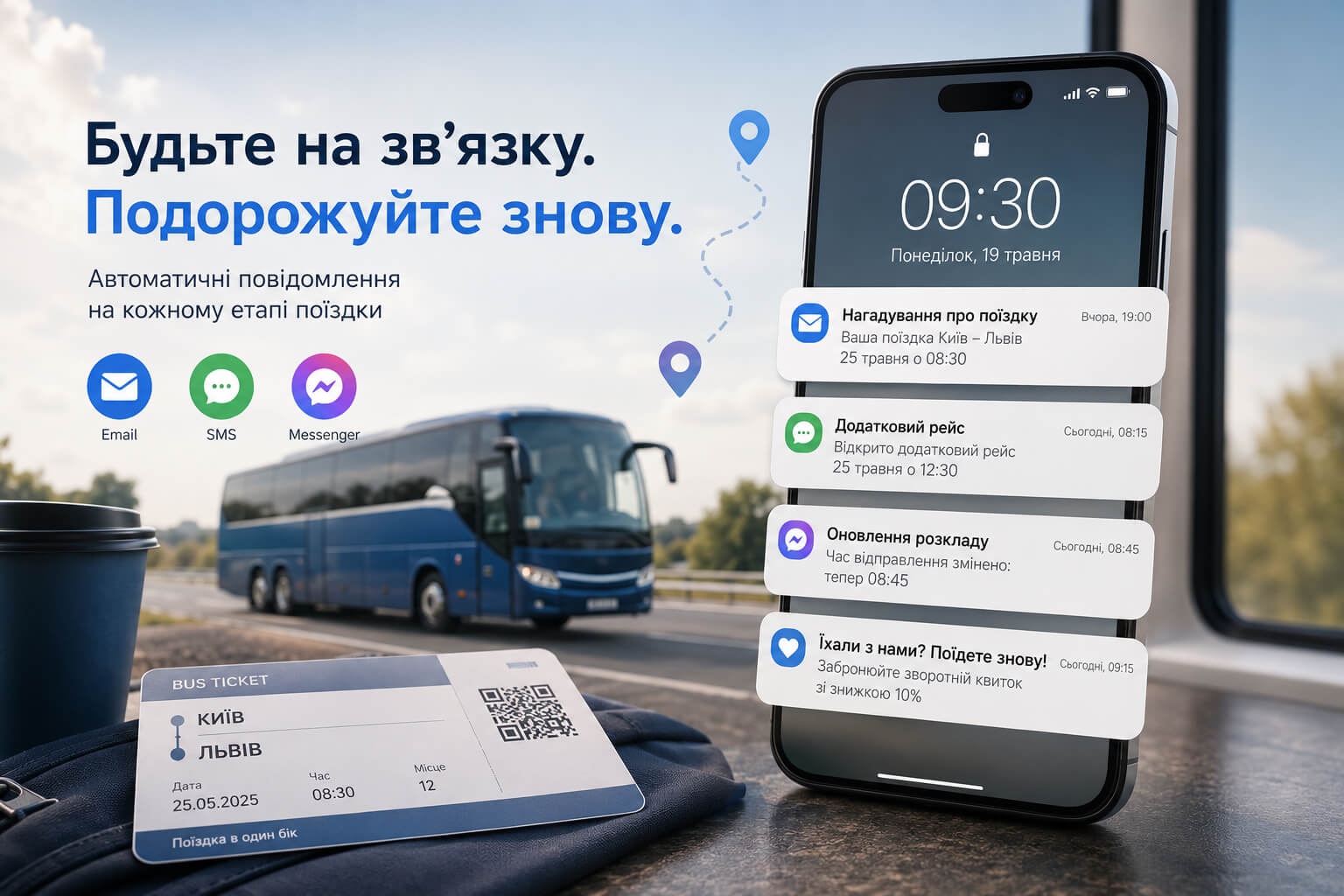
Email-розсилки підходять для детальніших повідомлень: нові напрямки, сезонні пропозиції, зміни в правилах перевезення, поради для подорожі. SMS і месенджери краще використовувати для коротких і важливих повідомлень: нагадування про рейс, зміну посадки, підтвердження бронювання, додатковий автобус на популярному напрямку.
Для цього потрібна нормальна CRM або хоча б база пасажирів із маршрутами, датами поїздок, каналами залучення і статусами замовлень. Без сегментації розсилки швидко втрачають ефективність.
Агрегатори квитків і власний сайт перевізника
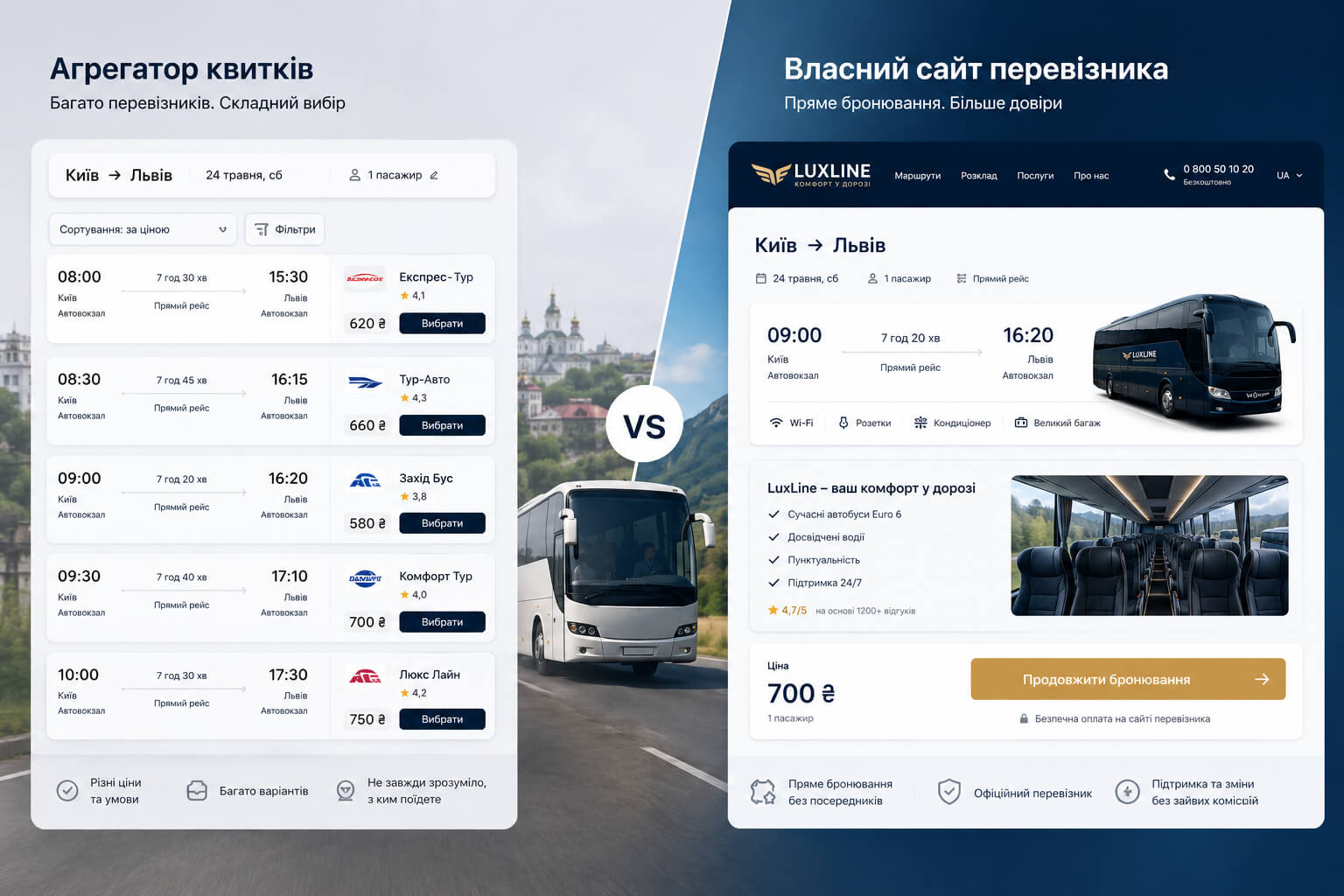
Агрегатори квитків можуть давати перевізнику продажі, бо частина пасажирів звикла порівнювати рейси на одному майданчику. Там видно ціну, час відправлення, тривалість поїздки й різних перевізників в одному списку.
Але агрегатори не повинні бути єдиним каналом продажів. Якщо перевізник залежить тільки від сторонніх платформ, він слабше контролює бренд, комунікацію, повторні продажі, аналітику й прямий контакт із пасажиром.
Власний сайт потрібен, щоб:
- отримувати прямі продажі квитків;
- розвивати SEO під маршрутні запити;
- збирати аудиторії для ремаркетингу;
- накопичувати базу клієнтів для повторних продажів;
- показувати сервіс, автобуси, умови поїздки й підтримку;
- знижувати залежність від комісій і правил агрегаторів;
- будувати довіру до бренду перевізника.
Найкраща модель для більшості перевізників — поєднання. Агрегатори дають додаткові продажі й присутність у порівнянні, а власний сайт залишається головною точкою бренду, SEO, реклами, аналітики й повторних комунікацій.
Семантика для автобусних перевезень
Семантика для автобусних перевезень будується навколо напрямків. Широкі запити на рівні реклама перевезень або транспортні перевезення людей часто приводять змішаний трафік: пасажирські перевезення, вантажоперевезення, рекламу на транспорті, вакансії або довідкові запити.
Для SEO і Google Ads потрібні окремі групи запитів:
- маршрути між містами: Київ Харків, Одеса Київ, Дніпро Запоріжжя;
- міжнародні напрямки: Україна Польща, Київ Варшава, Харків Берлін;
- комерційні запити: купити квиток на автобус онлайн, бронювання автобусних квитків онлайн, ціна квитка на автобус;
- інформаційні запити: графік руху автобусів, час у дорозі, де посадка, умови багажу;
- брендові запити: назва перевізника, відгуки, рейтинг автобусних перевізників.
Мінус-слова для реклами перевезень мають відсікти чужі наміри. Якщо ви продаєте пасажирські рейси, додайте мінус-слова для вантажоперевезень, реклами на автобусах, оренди рекламних площ, автовокзальних білбордів, роботи водієм, вакансій і нерелевантних міст.
Для міжнародних маршрутів розділяйте напрямок туди й назад. Запит Варшава Київ і Київ Варшава можуть мати різний попит, різний сезонний пік, різну конкуренцію і різну ціну кліка.
Що має бути на сторінці маршруту
Сайт автобусних перевезень має швидко відповідати на питання пасажира. Коли пасажир відкриває сторінку маршруту, він очікує одразу побачити рейс, графік, ціну, місце посадки й кнопку купівлі або бронювання.
Сторінка маршруту має містити дані, які допомагають пасажиру швидко прийняти рішення про купівлю.
| Елемент сторінки | Навіщо він потрібен |
| Маршрут і напрямок | Користувач одразу бачить, що потрапив на потрібний рейс. |
| Графік руху | Допомагає швидко порівняти час виїзду й прибуття. |
| Ціна квитка | Знімає головне заперечення перед купівлею. |
| Кнопка купівлі або бронювання | Скорочує шлях від переходу до продажу квитка. |
| Точки посадки й висадки | Зменшує кількість дзвінків із базовими уточненнями. |
| Час у дорозі | Допомагає пасажиру порівняти автобус із іншими варіантами. |
| Умови багажу | Знижує ризик непорозумінь перед рейсом. |
| Фото автобусів | Підсилює довіру, особливо на міжміських і міжнародних напрямках. |
| Відгуки | Показують реальний досвід пасажирів і допомагають обрати перевізника. |
| FAQ | Дає короткі відповіді на типові питання і робить сторінку зручнішою для пошуку та AI-відповідей. |
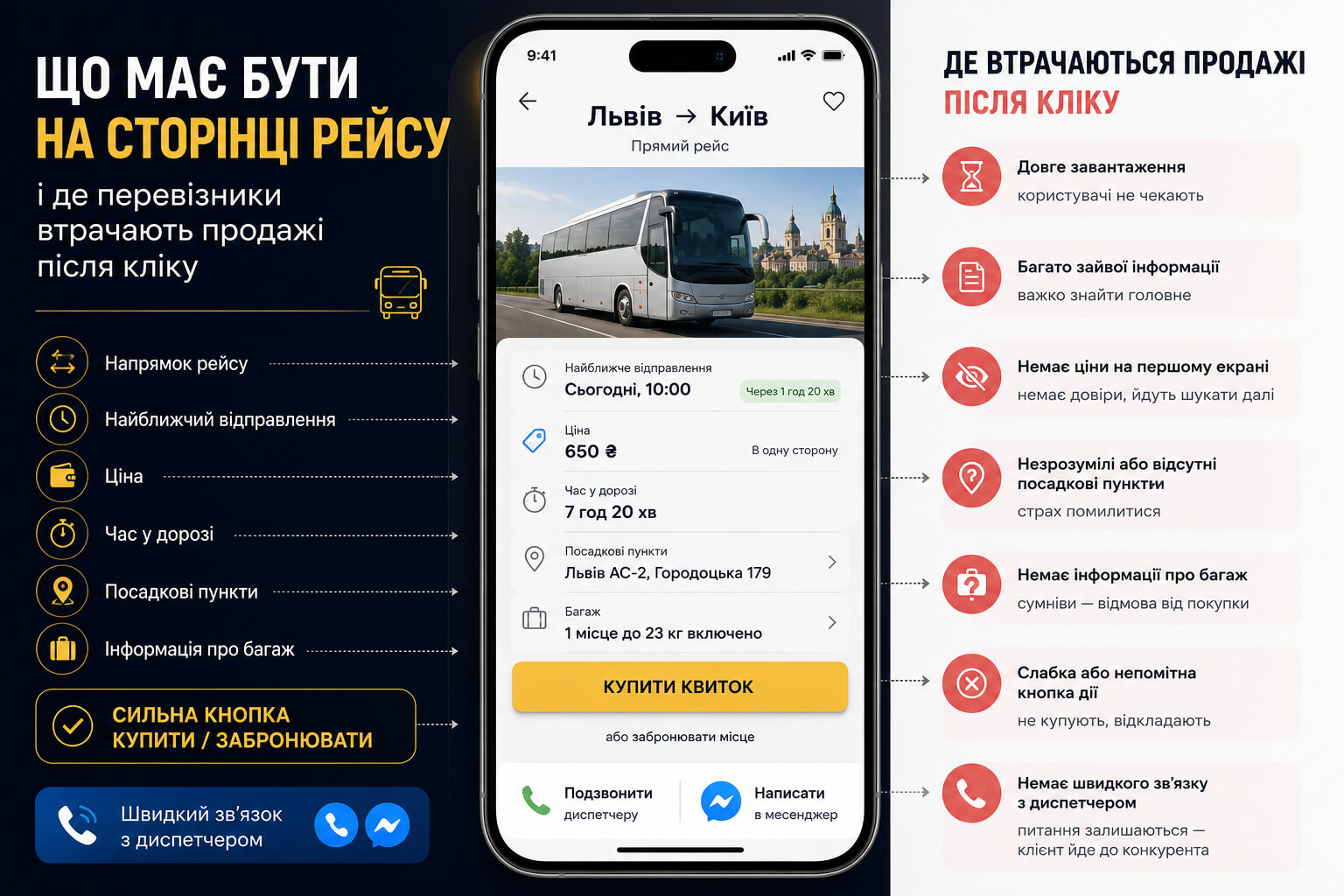
На мобільній версії перший екран сторінки маршруту має показувати напрямок, найближчий рейс, ціну, кнопку купівлі або бронювання і швидкий зв’язок із диспетчером. Якщо користувач має скролити кілька екранів до кнопки купити, частина трафіку буде втрачатися.
Для великих сайтів із продажу квитків важлива структура. Google пояснює, що навігація й внутрішні посилання допомагають пошуковій системі краще розуміти зв’язки між сторінками. Тому сторінки напрямків мають бути пов’язані з головною, розділами маршрутів, блогом, сторінками міст і схожими рейсами. Документація Google про структуру eCommerce-сайтів пояснює цю логіку на прикладі товарних сайтів, але для продажу автобусних квитків принцип такий самий.
Де перевізник втрачає продажі після переходу на сайт
Найбільше втрат виникає вже після переходу на сайт: сторінка не дає швидкої відповіді на запит пасажира, і людина відкладає купівлю або переходить до конкурента.
Спочатку перевірте шлях пасажира від першого контакту до купівлі квитка: куди він потрапляє після переходу, що бачить на першому екрані, як знаходить потрібний рейс і що може завадити завершити бронювання. Реклама продажу автобусних квитків не може працювати стабільно, якщо сторінка повільно відкривається, форма бронювання незручна, дзвінки не відстежуються, а користувач не розуміє, що відбудеться після оплати.
Типові причини втрати заявок:
- реклама веде на головну сторінку замість конкретного маршруту;
- на першому екрані мобільної версії немає ціни або кнопки купівлі;
- форма бронювання має зайві поля;
- немає швидкого зв’язку з диспетчером;
- не відстежуються дзвінки з Google Ads;
- покупки або заявки не передаються в GA4;
- немає UTM-міток для email, соцмереж, месенджерів і партнерських каналів;
- сторінка не пояснює умови багажу, оплату, посадку, запізнення і повернення квитка.
Якщо реклама вже приводить трафік, але продажів мало, почніть із технічного аудиту сайту і перевірки рекламної аналітики. Іноді проблема ховається в швидкості сайту, мобільній версії, структурі сторінок або некоректному відстеженні конверсій. Окремо потрібно провести аудит рекламного акаунту : знайти слабкі місця в кампаніях, перевірити конверсії, бюджети, посадкові сторінки та канали, які недопрацьовані або взагалі не використовуються в рекламі.
Аналітика каналів трафіку і продажів
Для автобусного перевізника аналітика має показувати, які маршрути, канали трафіку й рекламні кампанії приводять до дзвінків, бронювань, купівлі квитків і повторних замовлень.
Для перевізників це критично, бо частина продажів іде через сайт, частина — через диспетчера, частина — через дзвінки, частина — через месенджери. Google Ads дозволяє відстежувати дзвінки з оголошень і номерів на сайті як конверсії, а GA4 дає змогу налаштувати eCommerce-події для онлайн-продажів. Довідка Google Ads про відстеження дзвінків та документація GA4 щодо eCommerce допомагають зрозуміти, які події потрібно передавати в аналітику.
У проєктах із продажем автобусних квитків ми насамперед налаштовуємо такі події:
- перегляд сторінки маршруту;
- натискання кнопки купити квиток;
- початок оформлення замовлення;
- успішна купівля квитка;
- клік по номеру телефону;
- дзвінок із call asset в оголошенні;
- клік у месенджер;
- відправка форми бронювання;
- перехід із email або SMS;
- повернення користувача через ремаркетинг;
- повторна купівля квитка.
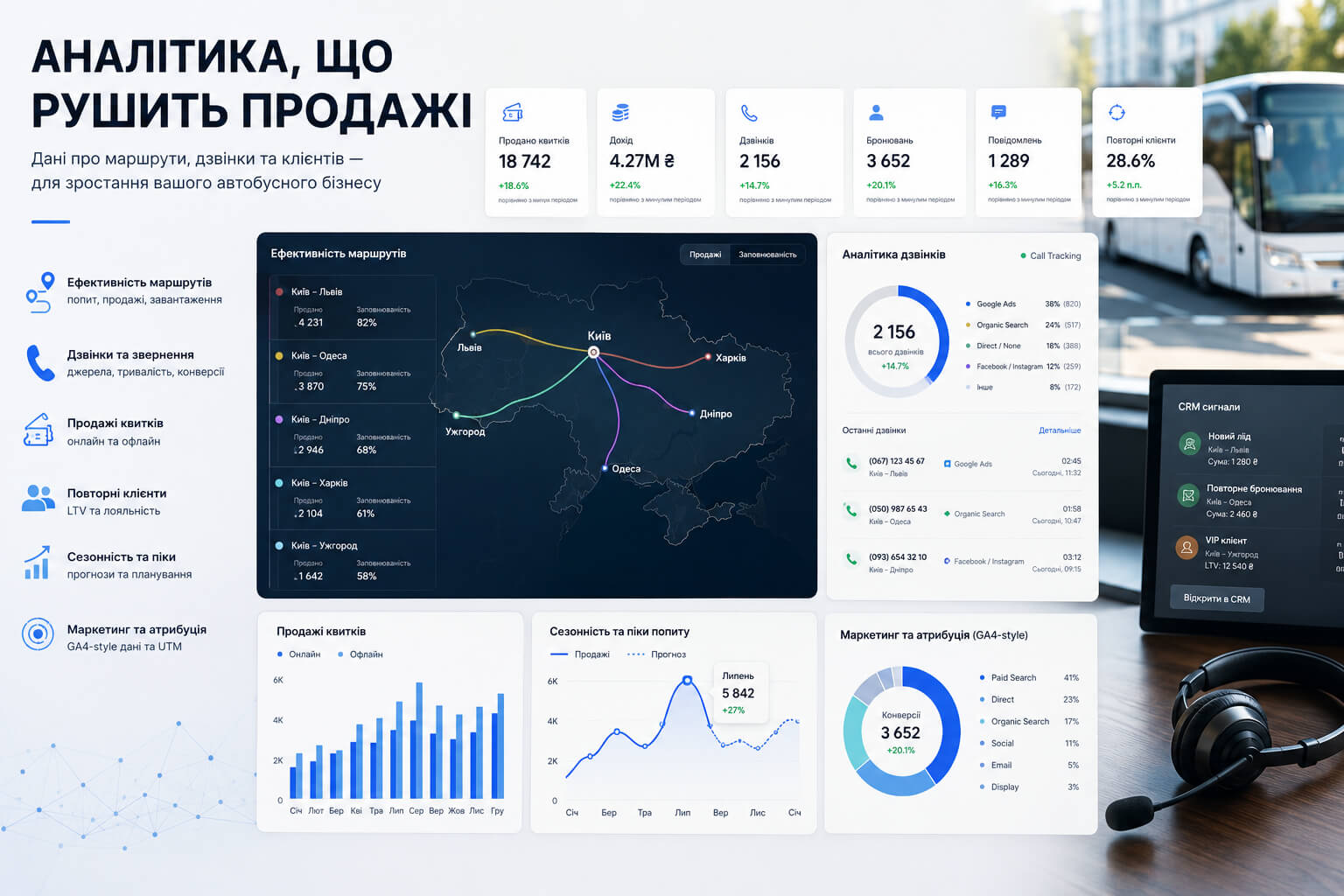
Усі переходи на сайт із зовнішніх каналів потрібно розмічати UTM-мітками. Так в аналітиці буде видно, звідки прийшов пасажир, який маршрут він переглядав і який канал привів до дзвінка, бронювання або купівлі квитка.
Чи потрібен Call tracking перевізнику?
Call tracking — це система відстеження телефонних дзвінків, яка показує, з якого каналу, кампанії, оголошення або сторінки прийшов дзвінок. Для перевізника це важливо, бо частина пасажирів купує або бронює квитки через диспетчера, а не тільки через сайт.
Без Call tracking дзвінки випадають з аналітики. У звітах видно кліки й переходи, але не видно, які кампанії реально привели звернення з наміром купити квиток. Через це можна помилково вимкнути ефективний канал або залишити бюджет там, де є трафік, але немає продажів.
Сезонність, події та піковий попит автобусних перевезень
Попит на автобусні маршрути нерівномірний. Перед святами, канікулами, початком навчального року, великими подіями та сезонними поїздками частина напрямків може різко зростати. Якщо не підготуватися заздалегідь, перевізник може отримати більше звернень, але втратити частину продажів через неоновлену інформацію, слабку комунікацію або перевантажених диспетчерів.
Плануйте комунікації під періоди, коли пасажири починають шукати квитки заздалегідь. Для міжнародних напрямків це можуть бути свята, літні поїздки, повернення додому, початок навчання або сезон роботи за кордоном. Для внутрішніх маршрутів — вихідні, великі концерти, спортивні події, навчальний рік, медичні або ділові поїздки між містами.
Перед піковим періодом перевірте маршрутні сторінки: графік, ціну, точки посадки, додаткові рейси, умови багажу й кнопку купівлі або бронювання. Якщо інформація застаріла або пасажир не бачить потрібний рейс одразу, частина трафіку піде в дзвінки, повторні уточнення або до конкурентів.
Схожа логіка є в просуванні туристичних і тревел-проєктів, де попит також залежить від сезону, напрямку, ціни, довіри й швидкості прийняття рішення. Детальніше про це ми розбирали у статті про контекстну рекламу туристичних послуг .
Наприклад, за 2–3 тижні до свят можна підготувати окрему комунікацію для популярних напрямків: актуалізувати інформацію на сторінках маршрутів, запустити рекламу на рейси з вільними місцями, зробити пости в соцмережах і надіслати повідомлення пасажирам, які вже їздили цим напрямком.
Репутація, відгуки і рейтинг автобусного перевізника
Рейтинг, відгуки й репутація перевізника напряму впливають на вибір пасажира. Коли кілька компаній пропонують схожий маршрут і близьку ціну, людина звертає увагу на пунктуальність, комфорт автобусів, безпеку, оплату онлайн і зрозумілість умов поїздки.
Реклама пасажирських перевезень приводить людину на сайт, але далі рішення залежить від довіри. Якщо сторінка не знімає ключові сумніви пасажира, навіть дорогий і добре налаштований трафік може не перетворитися на продаж квитка.
Перевірте, як виглядає перевізник у пошуку:
- чи є актуальні відгуки;
- чи видно інформацію про маршрути, графік і контакти;
- чи є фото автобусів і сервісу;
- чи немає суперечностей між сайтом, агрегаторами й Google Business Profile;
- чи відповідає компанія на відгуки професійно й без шаблонності.
Рейтинг міжнародних автобусних перевізників і рейтинг перевізників України часто цікавлять людей перед першою поїздкою. Тому блоки довіри, реальні фото, відгуки, умови безпеки та зрозумілі правила поїздки підсилюють і бренд, і ефективність реклами.
Практика SEO-Evolution: робота з автобусним перевізником Зелений Слон 7
У SEO-Evolution є практичний досвід роботи з перевізником Зелений Слон 7 . Співпраця починалася з комплексного аудиту: SEO, технічний стан сайту, юзабіліті, контент, посилальний профіль, конкуренти, структура і рекламні акаунти.
Аудит показав проблему, яка часто зустрічається у перевізників: сайт уже мав інформацію про компанію, але не мав повноцінних посадкових сторінок під основні напрямки. Для транспортної ніші це серйозне обмеження, бо попит формується навколо конкретних рейсів: Харків * Полтава - Київ, Київ - Полтава - Харків, а згодом і міжнародних маршрутів.
Після аудиту команда почала працювати над структурою напрямків, технічними правками, мета-тегами, текстами для маршрутних сторінок, внутрішньою перелінковкою і зовнішнім просуванням. Коли сторінки основних напрямків були створені, частина SEO-акценту змістилася з головної сторінки на маршрути.
Перші помітні результати по основних напрямках з’явилися вже через кілька місяців. За маршрутами з Полтави позиції росли швидше: частина запитів вийшла в ТОП-5, деякі — на перші позиції. Більш конкурентні напрямки Київ - Харків і Харків - Київ рухалися повільніше, але також почали закривати ТОП-10 по значній частині запитів.
Паралельно велася робота з контекстною рекламою, поки компанія не посилила цей напрямок власним спеціалістом. З часом фокус SEO змістився на розвиток маршрутних сторінок, блог, якість контенту, технічну чистоту сайту й підготовку до змін у пошуку, зокрема до AI-відповідей.
У кейсі Зелений Слон 7 ключовою точкою росту стала структура маршрутів. Після створення окремих сторінок для пріоритетних напрямків сайт отримав більше релевантних точок входу, а подальше просування вже підсилювало конкретні рейси, а не тільки головну сторінку.
Як зробити сторінки маршрутів зрозумілими для пошуку та AI-відповідей
AI-системи краще витягують інформацію зі сторінок, де є прямі відповіді, зрозумілі заголовки, таблиці, списки, приклади й конкретні формулювання. Це не означає, що текст потрібно писати для роботів. Пишіть для пасажира, але структуру робіть такою, щоб відповідь можна було легко процитувати. Для AI-відповідей важлива не довжина тексту, а його структура. Краще використовувати короткі визначення, прямі відповіді на питання, таблиці з параметрами рейсу, списки умов, покрокові інструкції, внутрішні посилання на пов’язані маршрути, FAQ-блоки. Нижче — приклад такого формату.
Які канали просування потрібні автобусному перевізнику?
Для перевізника немає одного універсального каналу. Google Ads допомагає швидко отримати попит на конкретні маршрути, SEO дає стабільні переходи з пошуку, соцмережі й розсилки підтримують зв’язок із пасажирами, а агрегатори можуть давати додаткові продажі. Оцінювати канали потрібно за маршрутами, дзвінками, бронюваннями, купівлею квитків і повторними поїздками.
Чому сторінки маршрутів важливі для SEO та реклами?
Окрема сторінка маршруту потрібна, щоб пасажир одразу бачив рейс, графік, ціну, точки посадки, умови поїздки й кнопку купівлі або бронювання. Для SEO така сторінка закриває запити за конкретним напрямком, а для реклами скорочує шлях від переходу до замовлення квитка.
Як зрозуміти, який канал приносить продажі квитків?
Потрібно налаштувати GA4, Google Tag Manager, UTM-мітки, call tracking і передачу ключових подій: перегляд маршруту, клік по кнопці купівлі, бронювання, дзвінок, звернення в месенджер, покупку й повторне замовлення. Без цього канали оцінюються за трафіком, хоча бізнесу важливі продажі та якість заявок.
Короткий план просування автобусного перевізника
Перед запуском реклами зробіть короткий аудит. Він допоможе знайти проблеми в сайті, рекламних кампаніях та аналітиці, які можуть забирати бюджет без реальних бронювань, дзвінків і продажів квитків.
- Перевірте структуру сайту й наявність сторінок основних маршрутів.
- Зберіть ключові слова за напрямками, містами, країнами й намірами купівлі.
- Підготуйте мінус-слова для Google Ads.
- Налаштуйте GA4, Google Tag Manager, дзвінки, месенджери й продажі квитків як конверсії.
- Запустіть пошукову рекламу під пріоритетні маршрути.
- Підготуйте SEO-план для маршрутних сторінок і блогу.
- Оновіть соцмережі: фото автобусів, графік, маршрути, відповіді на питання, відгуки.
- Налаштуйте email, SMS або месенджер-комунікації для повторних пасажирів.
- Перевірте присутність на агрегаторах і коректність інформації про рейси.
- Раз на тиждень аналізуйте продажі, дзвінки, заявки, канали й маршрути.
Якщо просування вже запущене, але результат нечіткий, перевірте всю систему: сайт, маршрутні сторінки, аналітику, рекламні кампанії, соцмережі, розсилки й повторні комунікації з пасажирами. Часто проблема виникає не в одному каналі, а в розриві між ними.
Висновок
Просування автобусних перевезень починається з розуміння маршруту, пасажира і шляху до купівлі квитка. Недостатньо просто запустити рекламу або написати кілька текстів на сайт. Потрібно бачити, де людина знаходить перевізника, що заважає їй купити квиток і які точки контакту можна посилити.
Якщо ви розвиваєте сайт автобусного перевізника, хочете покращити видимість у пошукових системах, збільшити продаж квитків на свої маршрути або зрозуміти, чому наявний трафік не дає очікуваного результату, звертайтесь до SEO-Evolution.
Ми проаналізуємо сайт, рекламні кампанії, структуру маршрутів, аналітику, контент і точки втрати заявок. Після цього підготуємо зрозумілий план дій: що потрібно виправити, які сторінки посилити, які канали залучити і як зробити просування більш ефективним для продажу квитків.