

Rollandia
Коротко про проєкт


Цілі та завдання, поставлені клієнтом
- Запустити контекстну рекламу з нуля та забезпечити стабільний потік конверсій.
- Поступово знизити вартість конверсії та підвищити коефіцієнт конверсії.
- Ефективно розподіляти бюджет між кампаніями, виключивши брендовий трафік із пошукових кампаній задля оптимального використання коштів.
- Назва проєкту: Rollandia
- Час роботи по проєкту: 2025-06-01 - Поточний час
- Статус проєкту: Активний
- Посилання: https://rollandia.pl/
- Послуги, надані на проєкті
- Поділитись
Опис проєкту
Про проєкт
Rollandia — польський клієнт, якому ми забезпечуємо потік клієнтів через контекстну рекламу в Google Ads. Співпрацю розпочали на початку червня 2025 року зі створення акаунту та запуску кампаній з нуля.
Послуги, що надаються на проєкті
- Контекстна реклама (Google Ads)
Цілі та завдання, поставлені клієнтом
- Запустити контекстну рекламу з нуля та забезпечити стабільний потік конверсій.
- Поступово знизити вартість конверсії та підвищити коефіцієнт конверсії.
- Ефективно розподіляти бюджет між кампаніями, виключивши брендовий трафік із пошукових кампаній задля оптимального використання коштів.
Що включав запуск контекстної реклами
Запуск контекстної реклами — це комплексна робота, яка складається з кількох послідовних етапів.
Аналіз ніші та конкурентів. Перед налаштуванням кампаній ми проаналізували ринок: вивчили рекламну активність конкурентів у платному пошуку, їхні оголошення, посадкові сторінки та унікальні торгові пропозиції. Це дозволило сформувати більш конкурентоспроможну стратегію.
Визначення цілей і структури акаунту. Разом із клієнтом визначили, які дії на сайті вважаються конверсіями, та опрацювали логічну структуру акаунту: кількість і типи кампаній, розподіл між брендовими та небрендовими запитами, пошуком і медійними форматами.
Збір семантики та мінус-слів. Сформували семантичне ядро для кожної кампанії — підібрали цільові ключові слова з урахуванням типів відповідності та склали вичерпний список мінус-слів для виключення нерелевантного трафіку.
Розробка структури груп оголошень. Згрупували ключові слова за темами та посадковими сторінками, щоб оголошення максимально відповідали запитам користувачів і посилювали показник якості.
Написання текстів оголошень. Створили кілька варіантів оголошень для кожної групи з урахуванням ключових слів, переваг продукту та закликів до дії. Для пошукових кампаній це адаптивні пошукові оголошення з опрацьованим набором заголовків і описів.
Налаштування розширень (активів) оголошень. Додали всі доречні розширення: уточнення, структуровані описи, посилання на розділи сайту, заклики, місцезнаходження тощо. Розширення збільшують видимість оголошень і підвищують CTR без додаткових витрат.
Налаштування відстеження конверсій. Налаштували цілі в Google Ads і Google Analytics 4: відстеження форм, дзвінків, оплат або інших ключових дій. Без коректного відстеження конверсій повноцінна оптимізація кампаній неможлива.
Налаштування ставок і бюджетів. На старті обрали стратегію призначення ставок, яка підходила для наявного обсягу даних. У міру накопичення статистики перейшли до автоматичних стратегій на основі конверсій.
Запуск і початковий моніторинг. Після запуску щоденно відстежували ключові показники: покази, кліки, CTR, вартість конверсії, пошукові запити. Оперативно виявляли та виправляли відхилення.
Регулярна оптимізація. На постійній основі розширюємо списки мінус-слів, тестуємо нові варіанти оголошень, коригуємо ставки за пристроями, аудиторіями та часом показу, масштабуємо те, що працює.
Результати
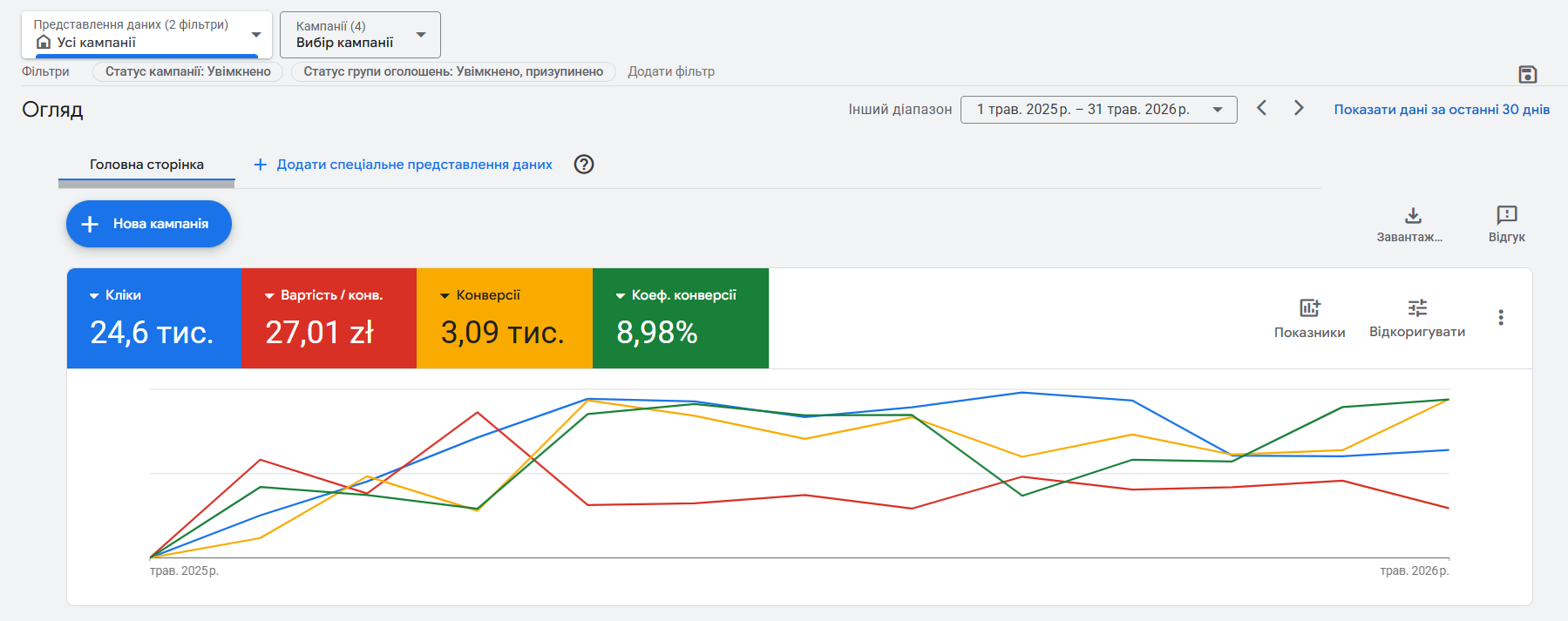
Рекламу запустили з нуля на новому акаунті — і продовжуємо її вести та оптимізувати. Динаміка ключових показників з моменту запуску:
- Кількість перетворень зросла на 250% з 10-30 до 45-106 на тиждень
- Коефіцієнт конверсій зріс із 3-5% до 10-16%
- Вартість конверсії впала з 70-75 PLN до 24-36 PLN
Загальні показники акаунту за травень 2025 — травень 2026 року (Google Ads):
- Кліки: 24,6 тисяч
- Конверсії: 3,09 тисяч
- Середня вартість конверсії: 27,01 PLN
- Коефіцієнт конверсії: 8,98%
У пошукових кампаніях повністю виключено брендовий трафік — він обслуговується окремими брендовими кампаніями. Це дозволяє раціонально розподіляти бюджет і коректно оцінювати ефективність залучення нової аудиторії.
Робота над проєктом триває.