


Шукаєте хорошу альтернативу Планувальнику ключових слів Google? Ось 24 інструменти, які можна використати для пошуку варіантів ключових слів і прогнозів обсягу пошуку.
Ключові слова — від старих часів “набивання” ключами до сучасних досліджень семантики та PPC-кампаній — досі керують світом пошуку.
Ключові слова — це фундаментальний елемент пошукового маркетингу: терміни й фрази, які допомагають “з’єднати” контент із пошуковими запитами.
Google не надає доступ до свого Планувальника ключових слів тим, у кого немає активного облікового запису Google Ads. На практиці доступ часто впирається в налаштування акаунта, режим роботи та оплату. Але хороша новина в іншому: для завдань SEO і PPC майже завжди достатньо кількох альтернативних джерел.
Нижче — 24 інструменти для пошуку нових ключових слів, оцінки складності та попиту.
Як обрати інструмент
- Для SEO-контенту — обирайте джерела з прив’язкою до SERP і обов’язково перевіряйте реальні запити в Google Search Console .
- Для PPC — дивіться CPC/конкуренцію і збирайте семантику під структуру кампаній заздалегідь. Якщо потрібно підсилити блок про рекламу, можна пов’язати дослідження ключів із контекстною рекламою .
- Для старту проєкту — важливо не лише “зібрати ключі”, а й закласти структуру сайту. У цьому допомагає SEO на етапі розробки .
Нюанс про цифри
Невелике спостереження з практики: одне й те саме ключове слово краще звіряти щонайменше у 2–3 джерелах і обов’язково дивитися видачу вручну. Часто “рівні” обсяги на папері розходяться в сервісах, зате збігаються тема, інтент і формулювання — для контенту це зазвичай важливіше, ніж ідеальна цифра.
1. Ahrefs
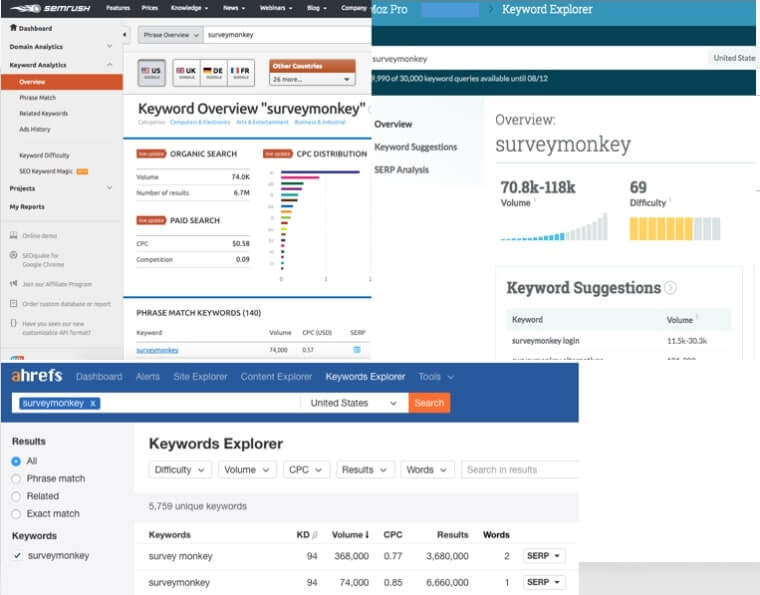
Поряд зі звітами про зворотні посилання та панелями органічного трафіку, Ahrefs має справді потужний інструмент для дослідження ключових слів.
Платний інструмент Ahrefs дає варіанти ключових слів і обсяг пошуку для різних типів відповідності.
Також є метрика складності ключових слів, яка під час практичного тестування нерідко виявляється точнішою, ніж у частини інструментів із подібною функцією.
2. SEMrush
У SEMrush є інструмент підказок ключових слів, що базується на великому масиві пошукових даних по різних країнах.
Результати включають варіанти ключових слів, розрахунковий обсяг пошуку, орієнтовну ціну за клік, оцінку складності та домени, які зараз ранжуються.
3. Moz
Moz запустили власний дослідник ключових слів як доповнення до набору SEO-інструментів.
Параметри фільтрації дозволяють виключати певні умови запиту, щоб отримати більше ідей, або залишати лише ті питальні фрази, що містять ваше ключове слово.
Результати включають варіанти пов’язаних запитів, розрахунковий обсяг пошуку та оцінку складності.
Moz також показує домени, які зараз ранжуються за ключовим словом, і нещодавні згадки цього ключового слова.
4. Keywordtool.io
Цей інструмент збирає підказки ключових слів із Google, YouTube, Bing і навіть Amazon.
Можна обирати домен Google, мову й локацію, а також використовувати схожі налаштування для інших джерел.
Сотні підказок доступні безкоштовно, але для оцінок обсягу пошуку зазвичай потрібен платний план.
5. Scrapebox
Scrapebox відомий як “сірий” інструмент, але має й цілком “біле” застосування — зокрема для генерації варіантів ключових слів.
З Scrapebox невелика жменька ключових слів може легко перетворитися на сотні й навіть тисячі варіантів.
Обмеження в тому, що це десктопне ПЗ під Windows. Плюс — разова покупка замість підписки.
6. WordStream
Передусім це платний інструмент для PPC, але у WordStream є й безкоштовний інструмент для ключових слів із лімітами на кількість запитів.
У безкоштовній версії зазвичай доступні пов’язані ключові слова, а обсяг пошуку частіше відкривається в платних тарифах.
7. Bing
Навіть для кампаній, орієнтованих лише на Google, інструмент підказок ключових слів Bing може дати корисну інформацію про пов’язані запити.
Оскільки Bing — це пошукова система, дані часто ближчі до “першоджерела”, ніж у багатьох агрегаторів.
Інструмент доступний безкоштовно після підтвердження сайту в Bing Webmaster Tools.
8. Keyword Discover
Це один із найстаріших інструментів для роботи з ключовими словами. Він витягує пошукові дані з широкого списку пошукових ресурсів .
Інструмент платний, але доступна обмежена кількість безкоштовних пошуків.
Прогнозовані обсяги можуть відрізнятися від даних Google, але сервіс корисний для пошуку ідей, які інакше легко пропустити.
9. KWFinder
Пошук за ключовими словами можна фокусувати за країнами та мовами.
Результати включають оцінку складності та варіанти ключових слів, які потім можна фільтрувати за метриками.
Це платний інструмент, тому безкоштовні запити зазвичай обмежені.
10. Google Search Console
Один із найкорисніших інструментів для дослідження ключових слів, бо він унікальний для вашого сайту й базується на даних Google.
Відфільтруйте брендові запити у звітах і шукайте ідеї, які можна розширити.
Якщо даних надто багато, використовуйте фільтри регулярних виразів, щоб знаходити запити за параметрами — покази, кліки, кількість слів.
11. SEOClarity
Інструмент контент-маркетингу, який дає багато інформації про ключові слова.
Допомагає зрозуміти цілі пошуку, типи контенту, попит на теми та URL із високими позиціями.
Платний інструмент, також містить дані про прогалини в контенті та стратегії ключових слів.
12. Keyword Surfer
Keyword Surfer показує обсяг пошуку за ключовими словами. Це зручно в парі з інструментами запитань, наприклад AnswerThePublic .
І це безкоштовно.
13. Keyworddit
Інструмент витягує ключові слова з Reddit і зіставляє їх із даними про обсяг пошуку.
Підходить, коли потрібно зрозуміти “живу мову” аудиторії й формулювання, якими люди реально користуються.
14. Majestic
Majestic включає генератор ключових слів і перевірку ключових слів у деяких планах.
Показує, як часто запит трапляється в їхньому індексі, а також оцінку обсягу пошуку.
15. Google Trends
Google Trends корисний для сезонності та відстеження трендів.
Зручно порівнювати формулювання між собою і перевіряти, що зростає, а що “здувається”.
16. Sistrix
Sistrix — платний інструмент із сильним модулем по ключових словах.
Можна отримувати ключові слова для різних країн, міст і мов.
17. Conductor
Conductor часто публікує списки “переможців і тих, хто просів”, і активно розвиває свої інструменти для роботи з ключовими словами.
Дає обсяг пошуку, ціну за клік і діапазони обсягу.
18. Infinite Suggest
Infinite Suggest — безкоштовний інструмент, який видає списки підказок Google.
Ці ключові слова можна потім перевірити в платних інструментах, щоб отримати більше даних.
19. BuzzSumo
BuzzSumo корисний для контент-ідей і моніторингу тем.
Навіть якщо у вас є дані з інструментів Google, корисно використовувати різні сервіси, щоб отримати другу точку зору.
20–24. Глобальні параметри
Якщо ви просуваєте сайти в регіонах, де Google конкурує з локальними пошуковиками, варто використовувати інструменти, створені під конкретний ринок.
Baidu
Найбільша пошукова система в Китаї. У неї є інструмент, схожий на Trends — Baidu Index , який показує тренди та пов’язані запити.
Ще один варіант — DragonMetrics для дослідження ключових слів.
Naver
Домінуюча пошукова система Південної Кореї. Для аналізу популярних запитів є Naver DataLab .
Yahoo Japan і Yahoo Taiwan
Це важливі пошукові канали на своїх ринках. У них є власні інструменти для роботи з ключовими словами (зазвичай за логіном).
Яндекс
Інструменти Яндекса можуть містити дані щодо запитів в окремих регіонах. Але для українських бізнесів часто є етичні та безпекові причини не використовувати продукти компаній, пов’язаних із державою-агресором. Якщо потрібна семантика за російськомовними запитами, зазвичай її можна зібрати через міжнародні інструменти та дані вашого сайту без прив’язки до екосистеми Яндекса.
Підсумок
Найкращий результат дає зв’язка інструментів: один сервіс для генерації ідей, другий — для оцінки SERP/конкурентів, і обов’язкова перевірка через дані сайту (Search Console, аналітика). Так ви отримуєте не лише список ключів, а й розуміння реального інтенту.


