Штучний інтелект за кілька років перевернув індустрію контенту. Те, що раніше вимагало днів роботи копірайтера, редактора, SEO-фахівця, сьогодні може згенерувати модель за хвилини. Але разом із цим з’явилася нова проблема: Google бачить не просто більше контенту — він бачить більше шуму .
Генеративний пошук Search Generative Experience (SGE) майже не показує «слабкі» сторінки. У відповідях переважають ті ресурси, які Google вважає:
- експертними;
- авторитетними;
- достовірними;
- корисними для користувача, а не для SEO-галочки.
І саме тут в гру входить E-E-A-T на практиці . Більше не достатньо просто знати, як розшифровується абревіатура. Важливо зрозуміти: як зробити так, щоб конкретно ваш сайт виглядав для Google надійним джерелом у час, коли AI-контент може створити будь-хто.
У цій статті розберемо:
- що таке E-E-A-T Google з точки зору практичного SEO , а не теорії з гайдів;
- як епоха AI-контенту змінила вимоги до довіри;
- які сигнали формують реальний E-E-A-T, а не декоративний;
- як побудувати контент-стратегію, де AI допомагає, але не руйнує репутацію;
- що потрібно зробити на сайті, щоб SGE взагалі розглядав його як джерело відповіді.
Що таке E-E-A-T Google: більше, ніж просто абревіатура
Google вперше описав E-E-A-T (раніше E-A-T) у Search Quality Rater Guidelines — інструкції для асесорів, які оцінюють результати пошуку вручну. З часом ці принципи вийшли за межі внутрішнього документа й стали основою того, що ми сьогодні називаємо якісним контентом для SEO .
Офіційні джерела Google для контексту:
- про створення корисного контенту: https://developers.google.com/search/docs/fundamentals/creating-helpful-content
- оновлені Search Quality Rater Guidelines: https://developers.google.com/search/blog/2022/12/google-raters-guidelines-update
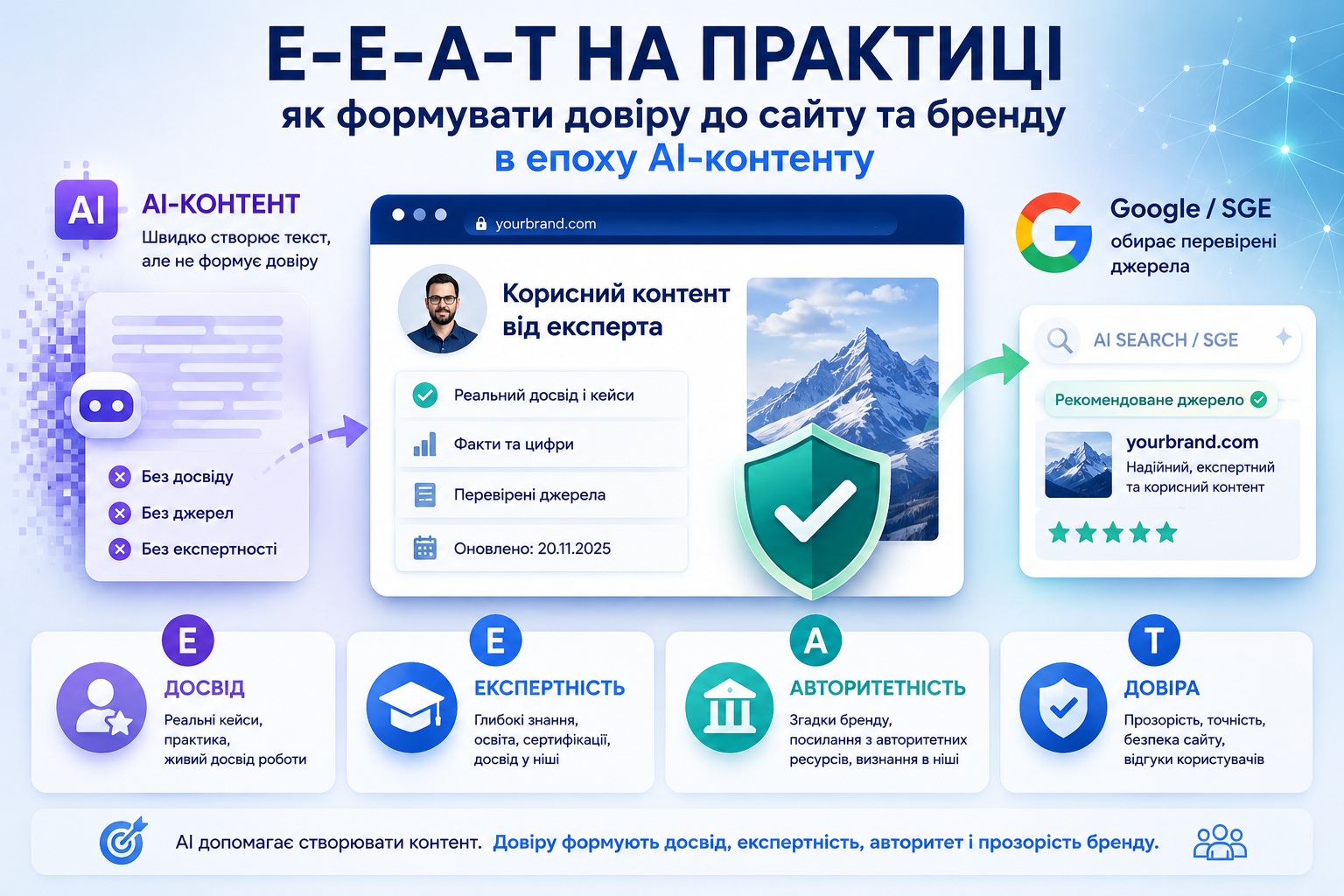
Чотири складові E-E-A-T:
- Experience (досвід)
- Expertise (експертність)
- Authoritativeness (авторитетність)
- Trustworthiness (надійність/довіра)
Формально це не «окремий алгоритм», але на практиці всі чотири компоненти впливають:
- чи потрапить сторінка до Top 10;
- чи буде вона обрана SGE як джерело для відповіді;
- чи зможе сайт вибудувати тематичний авторитет (topical authority) .
Далі розберемо кожен компонент не як теоретичне визначення, а як практичну SEO-задачу .
Experience: чому без реального досвіду контент виглядає як AI-шум
Перший блок — досвід автора або бренду . У епоху AI-контенту саме Experience став тим, що відрізняє «живий» матеріал від тексту, зібраного з інших статей.
Що Google вважає досвідом
Досвід — це не фрази «ми професіонали», а конкретні докази:
- реальні кейси з цифрами, скриншотами, графіками;
- опис процесу: «що ми зробили, чому саме так, що пішло не так»;
- фото з реальних проєктів, а не зі стоку;
- живі цитати спеціалістів, коментарі від першої особи;
- досвід роботи в ніші: роки, сегменти, типи клієнтів.
Для Google важливо, щоб контент не виглядав як реферат . Саме тому SGE віддає перевагу статтям, де автор показує: «я це робив, бачив, налаштовував, тестував».
Якщо вам потрібно глибше розібратися, як саме працює Search Generative Experience і чому його алгоритми настільки критично ставляться до довіри та точності контенту, раджу ознайомитися з детальним матеріалом у нашому блозі: « Як працює SGE (Search Generative Experience): що потрібно знати » . У статті розібрано механіку SGE, процес формування генеративних відповідей, фактори відбору джерел та роль E-E-A-T у появі сайту в SGE-блоках. Це допоможе краще зрозуміти, чому Google сьогодні так жорстко фільтрує контент і вибирає лише справді авторитетні ресурси.
Типові помилки з Experience
- стаття переписана з кількох джерел без додавання власних спостережень;
- AI-контент без жодних практичних прикладів;
- однаковий тон «універсального експерта», який пише і про SEO, і про ремонт даху;
- відсутність конкретики (цифр, інструментів, параметрів, хронології).
Якщо ви хочете посилити E-E-A-T на практиці — почніть саме з досвіду . Google набагато легше «вірить» у матеріал, де є живі деталі, ніж в ідеально вичитаний, але стерильний текст.
Expertise: експертність, яку можна перевірити
Другий рівень — експертність автора . У SGE майже не видно контенту, де автор «нікому не відомий» і не має цифрової історії у темі.
Як Google інтерпретує експертність
Експертність складається з:
- релевантного досвіду (посади, проєкти, клієнти в ніші);
- формальної освіти або сертифікацій (особливо для YMYL-тем: фінанси, медицина, юриспруденція);
- попередніх публікацій автора на цю ж тему;
- присутності в зовнішніх джерелах (інтерв’ю, цитати, подкасти).
Для складних тем (SEO, AI-пошук, аналітика, реклама ) Google очікує, що статтю писатиме не «універсальний копірайтер», а людина, яка реально працює з цим щодня.
Як підсвітити експертність у контенті
- Додавайте короткий блок про автора в кінці статті.
- Створюйте окремі author-pages із біографією, досвідом, публікаціями.
- Згадуйте реальні інструменти та підходи, з якими працює експерт.
- Не приховуйте, що автор — співробітник або партнер компанії.
Це не тільки посилює E-E-A-T, а й працює на довіру до бренду , що важливо в умовах AI-контенту, коли користувачі все частіше дивляться «хто це написав?».
Authoritativeness: авторитет сайту і бренду в очах Google
Авторитетність (Authoritativeness) — це вже історія не лише про автора, а про весь сайт.
Google аналізує:
- хто посилається на цей ресурс;
- де згадується бренд;
- чи цитують його у нішевих статтях;
- як часто сайт виступає джерелом у дослідженнях або оглядах.
Для SGE це критично: якщо існує 10 сайтів із хорошим контентом, у відповідь потраплять ті, які мають вищий тематичний авторитет (topical authority) .
Як будувати авторитетність
- Публікувати не одну «разову» статтю, а серію матеріалів навколо теми (кластеризація контенту).
- Брати участь у нішевих подкастах, конференціях, вебінарах.
- Робити спільні матеріали з іншими експертами.
- Публікувати гостьові статті на релевантних майданчиках.
- Домагатися згадок у профільних медіа.
Це вже не класичний «лінкбілдинг заради посилань». Це побудова присутності бренду в екосистемі , що напряму підсилює E-E-A-T Google.
Trustworthiness: довіра як головна валюта в епоху AI-контенту
Четвертий компонент — довіра . У час, коли AI-контент можуть згенерувати за 5 хвилин, Google діє дуже прагматично:
якщо є сумніви, система просто вибере інше джерело.
Що впливає на довіру до сайту
- Наявність сторінок «Про нас», «Контакти», «Політика конфіденційності», «Умови використання».
- Реальні контакти: адреса, телефон, юридичні реквізити.
- Прозорість щодо авторів (імена, посади, фото).
- HTTPS, адекватна безпека, відсутність підозрілої реклами.
- Оновлення контенту: дата публікації та дата останнього оновлення.
- Відсутність грубих помилок, протиріч, застарілих даних.
Це ті речі, які сам користувач сприймає інтуїтивно, а SGE — алгоритмічно. Надійні сайти частіше потрапляють у генеративні відповіді саме через сукупність цих сигналів.
Чому E-E-A-T став обов’язковим, а не «приємним бонусом»
Ще кілька років тому якісний контент міг пробиватися в органіку навіть із посередньою репутацією сайту. Сьогодні — ні. З трьох причин:
- Вибух AI-контенту. Ринок наповнили сотні «SEO-статей», які виглядають однаково. У такому середовищі Google змушений різко посилювати фільтри.
- Helpful Content → Core. Helpful Content Update перестав бути окремим сигналом і вбудований у загальний алгоритм ранжування. Принцип лишився той самий: нагороду отримують сторінки, що реально допомагають людям, а не оптимізовані лише «під ключ».
- Search Generative Experience (SGE). У SGE немає місця для «сірих» сайтів. Якщо сторінка не має чіткого E-E-A-T, вона просто не розглядається як джерело відповіді.
Тобто E-E-A-T уже не про те, як «підвищити позиції», а про те, чи взагалі ви будете присутні в майбутньому пошуку .
Як епоха AI-контенту змінює вимоги до E-E-A-T
Тепер — найболючіше питання: як поєднати AI-контент і вимоги до E-E-A-T, щоб не нашкодити сайту?
Що змінилося з появою AI-контенту
- AI знімає бар’єр входу в SEO. Раніше створити якісний текст було дорого й повільно. Тепер — швидко і доступно. Це означає: конкуренція у SERP зросла не тільки в кількості сторінок, а й у темпах їх появи.
- Google не може довіряти тексту «за замовчуванням». AI може звучати впевнено, але помилятися. Тому Google шукає, за що зачепитися:
- хто автор;
- чи є досвід;
- чи є згадки в інших джерелах;
- чи підтверджуються факти.
- Контент без досвіду виглядає однаково. Якщо ви дозволяєте AI повністю писати статті, не додаючи реальних деталей, ви автоматично потрапляєте в групу «одна з тисяч сторінок на цю тему».
Ризики “чистого” AI-контенту
- галюцинації (вигадані дослідження, неіснуючі статистики);
- поверхневі пояснення;
- стерильний тон без «голосу бренду»;
- відсутність реальних інструментів, кроків, помилок;
- дублювання структур та формулювань з інших сайтів.
І головне — такий контент погано формує довіру до сайту , навіть якщо формально оптимізований під ключові запити.
Як використовувати AI-контент без шкоди для E-E-A-T
Правильне питання сьогодні звучить не «користуватися AI чи ні», а «як саме ним користуватися» .
Ефективна модель роботи виглядає так:
- AI як асистент, а не автор. Використовуйте моделі для:
- генерації структури статті;
- варіантів формулювань;
- підказок щодо кутів розкриття теми;
- первинного зведення інформації.
- Людина як носій досвіду. Додавайте:
- реальні приклади з вашого бізнесу;
- скриншоти результатів;
- опис експериментів;
- конкретні інструменти, налаштування, цифри.
- Редактор як гарант точності. Перевіряйте:
- дати, числа, назви;
- дослідження (чи справді вони існують);
- відповідність локальним законам, умовам ринку.
- Експерт як «обличчя» матеріалу. Публікуйте статтю від реальної людини із зазначенням її ролі, досвіду, посиланням на інші роботи.
У такому форматі AI-контент не руйнує E-E-A-T, а навпаки, допомагає масштабувати експертизу : автор витрачає менше часу на «чернетки» і більше — на глибину.
Як побудувати E-E-A-T на практиці: покрокова методологія
Більшість сайтів програють не тому, що «не знають про E-E-A-T», а тому, що не мають чіткої процесної моделі роботи з ним. Нижче — методологія, яка ефективно працює і вже підтвердила свою результативність у проектах, що потрапляють у SGE-відповіді.
Командна структура E-E-A-T: хто за що відповідає
E-E-A-T — це не завдання копірайтера чи SEOшника. Це процес , який включає:
Автор — джерело досвіду (Experience + Expertise)
Повинен:
- надавати реальні кейси та інсайти;
- погоджувати зміст та фінальні висновки;
- ділитися даними, скриншотами, цифрами;
- підтверджувати свою експертність біографією.
Редактор — гарантія стилю й точності (Trust)
Перевіряє:
- логічні переходи;
- фактчек (включно з перевіркою досліджень);
- унікальність погляду, глибину.
SEO-фахівець — структуризація та topical authority (Authority)
Відповідає за:
- кластеризацію тем;
- семантичні зв’язки між статтями;
- оптимізацію для SGE;
- технічні сигнали E-E-A-T.
Бренд / Компанія — фундамент довіри
Забезпечує:
- прозорість сторінок «Про нас», «Контакти», «Політики»;
- стабільність домену;
- репутацію в ніші;
- згадки у зовнішніх джерелах.
Ця модель дозволяє створювати контент, який Google розуміє як живий , а не як результат роботи фабрики AI-текстів.
Структура статті, яка підсилює E-E-A-T за рахунок самої подачі
Google SGE «читає» текст як людина, і тому важливі:
- короткі абзаци;
- чіткі підзаголовки;
- пояснення термінів у контексті, а не шаблонно;
- логічні переходи між розділами;
- приклади, що демонструють знання теми.
Далі — ідеальна структура статті, яка вбудовує E-E-A-T у сам текст.
Структура, що працює
- Проблема/контекст. Пояснити, чому тема важлива. Вказати на реальні зміни (SGE, Helpful Content, AI).
- Глибоке пояснення термінів. Не визначення з Вікіпедії, а пояснення етапів , процесів , сигналів .
- Приклади з практики. Живий досвід автора → ключ до успішного E-E-A-T.
- Порівняння/аналітика. Показує унікальне розуміння теми.
- Рекомендації та алгоритми. Покрокові інструкції, які можна застосувати одразу.
- Список інструментів. З посиланнями на перевірені джерела.
- Висновки, що не повторюють текст. Підкреслити головні дії, а не переказувати зміст.
Це критично важливо, бо SGE обирає тексти не за «насиченістю ключами», а за цінністю .
Як побудувати тематичний авторитет (topical authority)
Topical authority — один із найсильніших факторів виведення статей у SGE. Google хоче показувати сайти, які глибоко знають тему . Не поверхнево, не «раз у квартал», а системно.
Core principles topical authority
1. Семантичні кластери
Одна стаття = нуль авторитету. Кластер із 10 статей = сигнал спеціалізації. 20+ статей з внутрішніми зв’язками = доменна перевага.
2. Покриття всієї теми, а не вибіркові ключі
Приклад: якщо сайт створює контент про SEO, але немає статей про:
- crawling (сканування сторінок роботами Google) ;
- indexing (додавання сторінок до індексу пошукової системи) ;
- SGE ranking (принципи ранжування у Search Generative Experience) ;
- authority signals (сигнали авторитетності сайту та сторінок) ;
- AI-content detection (методи визначення контенту, створеного штучним інтелектом) ;
- link spam update (оновлення Google, спрямовані на боротьбу зі спамними посиланнями) ;
- intent matching (відповідність контенту пошуковому наміру користувача) ;
— Google вважає тему непокритою.
3. Глибина кожної статті
Поверхневі матеріали не знижують авторитет, а знищують його.
4. Логічні внутрішні посилання
SGE має семантичну пам’ять: якщо статті пов’язані природно, а не штучно, він розуміє структуру знання.
5. Оновлення старих матеріалів
Google цінує актуальність більше, ніж обсяг.
Технічний E-E-A-T: schema.org, entity-SEO, структура даних
Технічний рівень E-E-A-T часто недооцінюють, але він є критично важливим.
Schema, яку має використовувати кожен сайт, що хоче потрапляти у SGE
1. Organization Schema
Показує:
- назву компанії;
- контакти;
- соцмережі;
- логотип;
- адресу.
2. Author Schema
Для кожної статті має бути вказаний автор з:
- ім’ям;
- посадою;
- URL сторінки автора;
- зображенням.
3. Article Schema
Статті повинні містити:
- дату публікації;
- дату оновлення;
- headline (основний заголовок матеріалу, який відображається у структурованих даних) ;
- description (короткий опис статті, який використовується в Schema.org і може впливати на те, як сторінка виглядає у видачі) ;
- mainEntity (головний об’єкт або питання, якому присвячена сторінка — важливий елемент для SEO, бо допомагає Google краще зрозуміти, про що матеріал) .
4. Breadcrumb Schema
Дозволяє Google краще розуміти структуру контенту.
5. FAQ Schema (якщо доречно)
Особливо ефективно під ключі з наміром «how-to».
Як створювати контент, який Google SGE обирає для відповідей
Принцип 1: Контент має бути глибшим, ніж інший у SERP
SGE не бере матеріал, який повторює те, що вже є.
Принцип 2: Унікальність погляду автора
Потрібно давати:
- висновки з досвіду;
- конкретні помилки;
- власні підходи.
Принцип 3: Підкріплення фактами й джерелами
Джерела мають бути реальними: Google, Statista, HubSpot, Pew Research.
Принцип 4: Структура, яка читається легко
Чим простіше сприймається текст — тим більше шансів потрапити у SGE.
Як оцінювати власний E-E-A-T: чекліст
Experience
- Чи є у статті практичний досвід?
- Чи є приклади, кейси, хронологія, реальні дані?
Expertise
- Чи відповідає автор темі?
- Чи є сторінка автора?
- Чи є зовнішні згадки?
Authoritativeness
- Скільки якісних матеріалів у цій темі є на сайті?
- Чи є зовнішні посилання/згадки?
Trustworthiness
- Чи є у сайту контактні дані?
- Політики конфіденційності?
- Чи оновлюється контент?
- Чи є структурована інформація про виконавця?
Типові помилки, які руйнують E-E-A-T
- Анонімні або «вигадані» автори.
- AI-тексти без редагування.
- Застаріла статистика.
- Відсутність джерел.
- Немає оновлень статей.
- «Поверхнева» подача теми.
- Непослідовність тональності та стилю.
- Відсутність внутрішніх посилань і кластерів.
- Використання стокових образів замість реальних фото.
- Немає доказів компетентності (портфоліо, кейси, цифри).
Висновок: майбутнє пошуку належить тим, хто доводить свою реальність
AI-контент буде тільки рости. Але разом із ним буде рости й кількість фільтрів. Google прагне показувати не тексти, а джерела, яким можна довіряти .
У цій реальності E-E-A-T — це:
- не модний термін,
- не рекомендація для копірайтерів,
- не «техніка» оптимізації.
Це основа довіри , без якої сайт не матиме стабільного органічного трафіку.
Головна формула звучить так:
AI може допомагати створювати контент, але довіру формує тільки людина.